

Boxing vs Muay Thai vs BJJ: Which Martial Art is Right for You in Singapore?
Boxing vs Muay Thai vs BJJ: Which Martial Art is Right for You in Singapore?
Singapore has a healthy martial arts scene. Within a few kilometres of the CBD, you can find gyms offering boxing, Muay Thai, Brazilian Jiu-Jitsu, MMA, and several other disciplines. If you're new to all of them, choosing between them can feel overwhelming.
This guide is an honest comparison. We'll cover learning curve, fitness outcomes, what each is best for, and practical considerations in the Singapore context. We'll also be transparent about where boxing wins — and where it doesn't.
Learning Curve
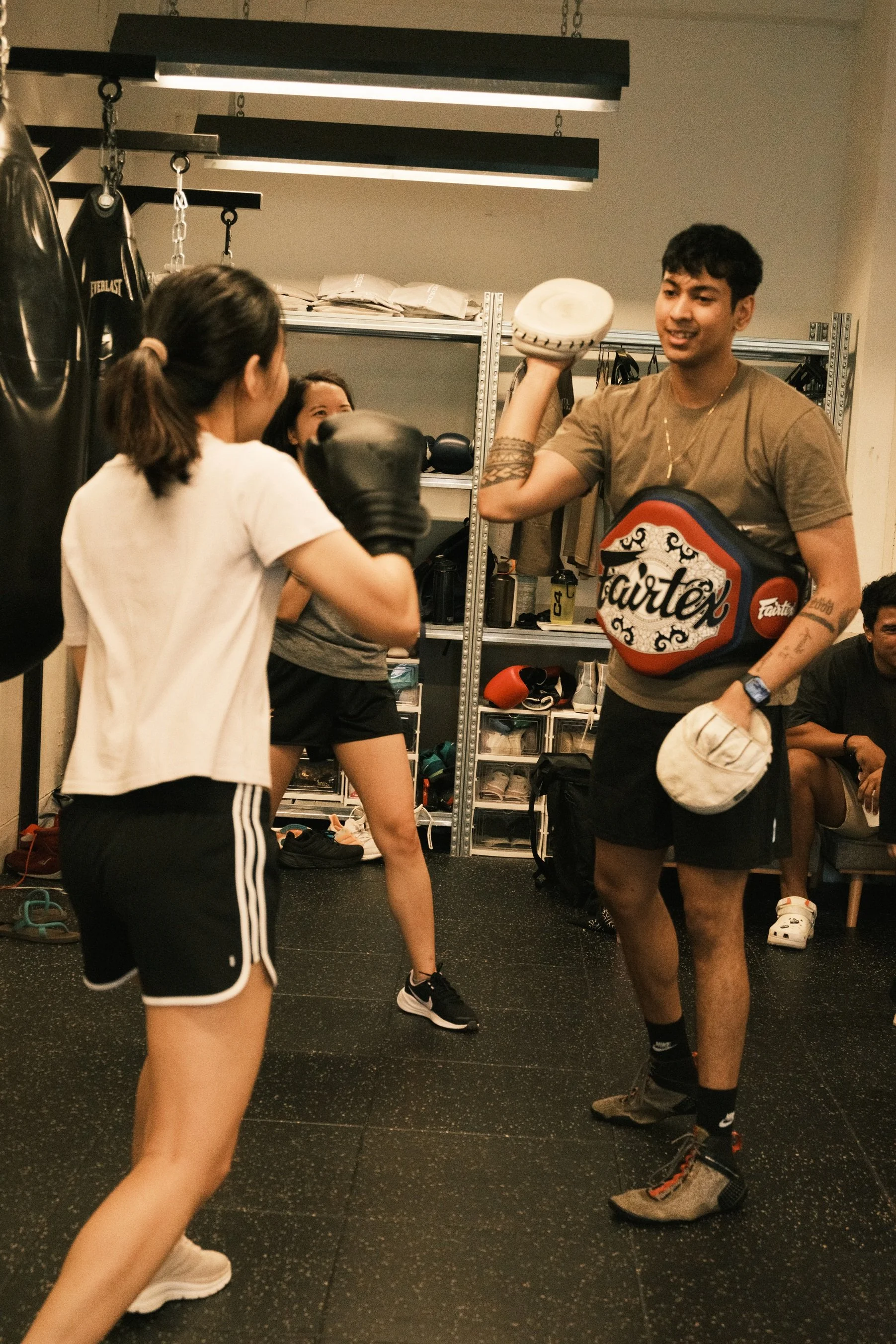
Boxing has the lowest barrier to entry of the three. Within one or two sessions, you'll understand the basic stance, guard, and the jab-cross. Progress feels tangible almost immediately — which matters for adult learners who've spent their lives being good at things. Feeling like a complete beginner is uncomfortable, and boxing shortens that phase more than most martial arts.
Muay Thai has a steeper curve because you're coordinating four limbs rather than two. The kicking mechanics take time to develop, and learning to defend against leg kicks and knees requires partner drilling that isn't always available in large beginner classes.
BJJ is the most technically complex of the three. Progress is measured in years, not weeks. Many people love this — it becomes a lifelong pursuit. But if you're looking for an accessible fitness activity that delivers early wins, BJJ is the hardest starting point.
Fitness Outcomes
All three produce good fitness outcomes. The differences are in emphasis.
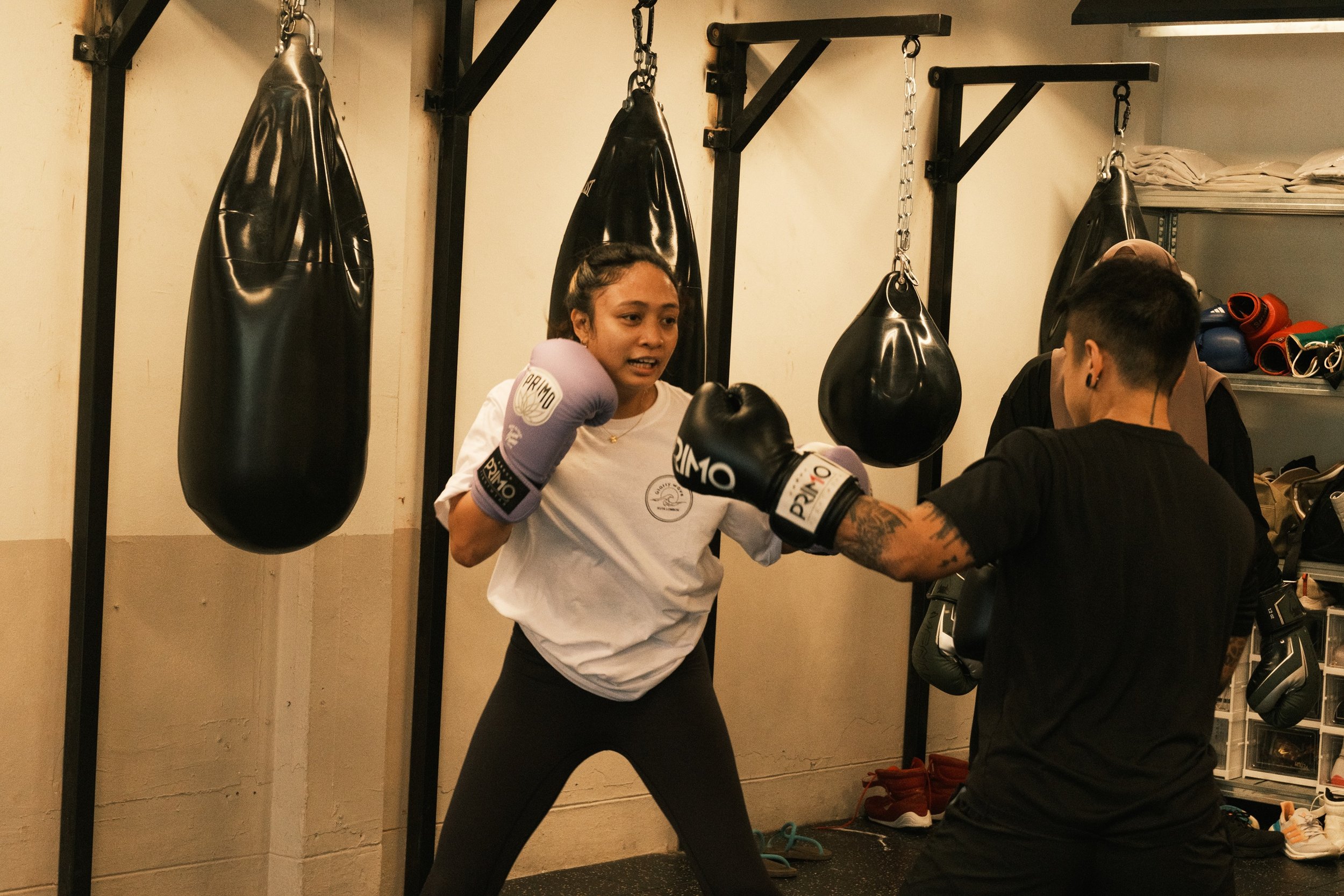
Boxing and Muay Thai are predominantly cardiovascular, with boxing having a slight edge for upper-body conditioning and Muay Thai for overall full-body conditioning due to the kicking mechanics.
BJJ is more strength and flexibility-focused. Rolling (live practice) is intense, but the cardio peaks are shorter and less frequent than in a standing striking class. If weight loss is your primary goal, boxing or Muay Thai will generally get you there faster.
Self-Defence Value
Muay Thai and BJJ both have strong self-defence applications. Muay Thai's striking range and BJJ's ground control have both demonstrated effectiveness in real-world scenarios.
Boxing's self-defence value is often underestimated. Strong footwork and head movement — the defensive fundamentals of boxing — are among the most practically useful skills you can develop. Most untrained people fight at boxing range. Understanding how to control that distance is genuinely useful.
Why Boxing Is Often the Right Starting Point
For someone who's never trained any martial art and is primarily motivated by fitness, stress relief, and learning a new skill — boxing is the natural entry point. It's accessible, delivers fast results, and builds a movement foundation that transfers to other martial arts if you eventually want to explore them.
Many of our members tried Muay Thai or gym HIIT first and came to boxing because they wanted more technique and focus alongside their cardio. The skill dimension makes it sustainable in a way that pure conditioning classes aren't.
